
Entry Information
Alexia Groff
Ms
Female

22/12/1997
United Kingdom
Passport
15DK3
French
Email hidden; Javascript is required.
+447880497635
12 Cromwell Crescent SW5 9QW
London
United Kingdom
Life Science and Medicine
N/A
Now that I am in the last year of my PhD studies, I am looking to share my research and explore new horizons for the next steps in my career. The cross-cultural and interdisciplinary nature of The Hong Kong Laureate Forum would allow me to network with individuals from many different disciplines from all over the world, and I am eager to contribute to this intellectual exchange by presenting my own work. Although my project is focused on plant biotechnology, I have a wider interest in the future of food and how this enormous challenge can be addressed through collaborative and innovative research. Interacting with world-renowned experts, as well as with other young scientists, would provide invaluable perspectives into the present and future of science across many different fields. I would also be eager to engage with the Shaw Laureates, some of the greatest minds of our time. In conclusion, it would be truly inspiring to attend an academic exchange of this calibre. Thank you for your consideration.
Postgraduate (PhD)
Life Sciences
Imperial College London
London, UK
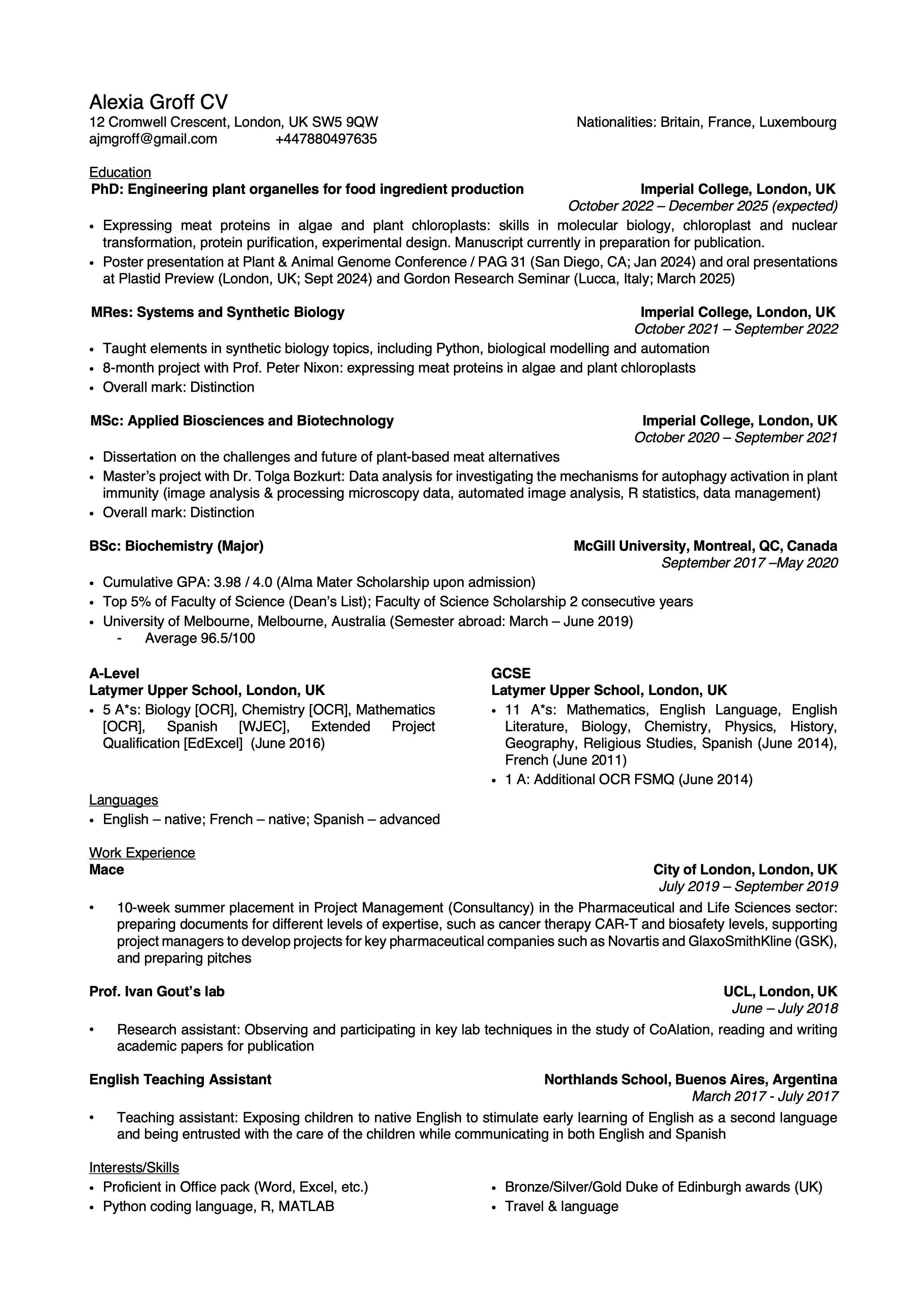
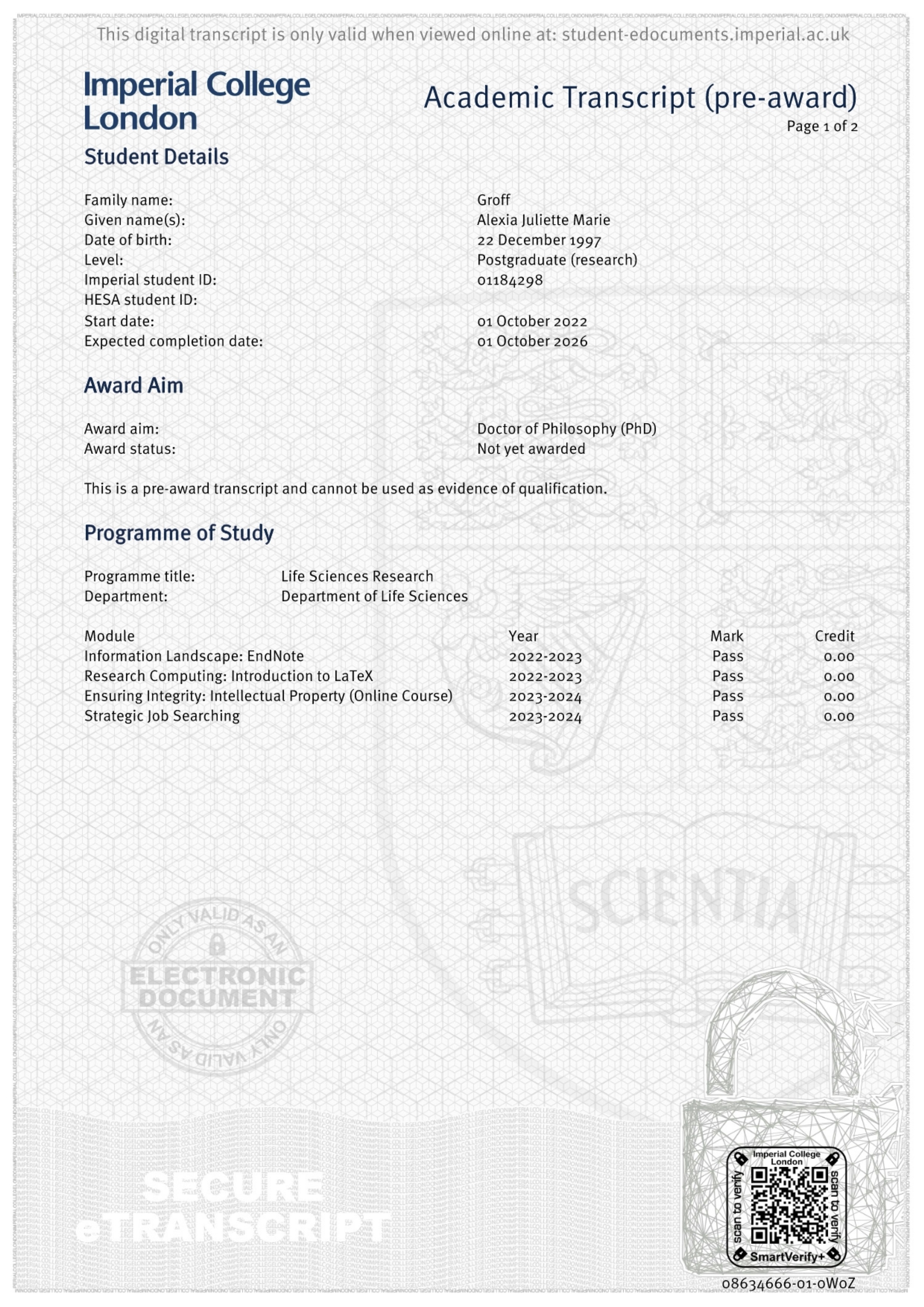
Imperial College London
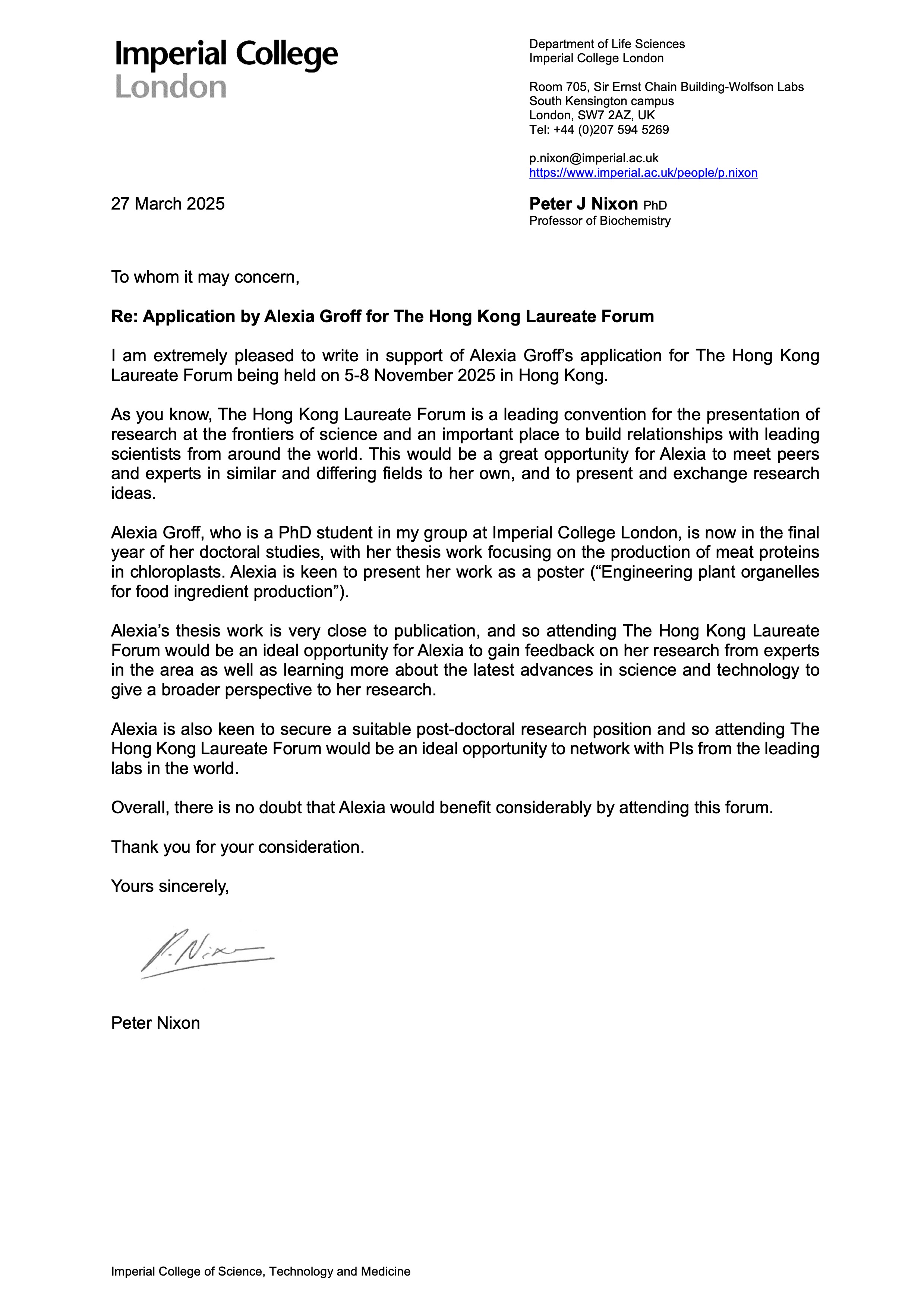
First Academic or Research Referee *
Prof. Peter Nixon
Imperial College London
Professor
Email hidden; Javascript is required.
Second Academic or Research Referee
Plants can act as self-contained, biodegradable bioreactors which can express a range of recombinant proteins; one example is meat proteins, like myoglobin (Mb), for food ingredients. As opposed to other organisms, plants are suitable hosts for commercial protein expression as they can either be harvested whole or used to purify the desired product. The aim of this project is to produce Mb in the chloroplast of photosynthetic organisms, using model organisms as steps towards an edible plant. The organisms of choice are Chlamydomonas reinhardtii (unicellular algae), Nicotiana tabacum (tobacco), and Lactuca sativa (lettuce). Transformation vectors were first designed and constructed for each species and then used to genetically modify these organisms using biolistic transformation. Expression of Mb has so far been confirmed and quantified in all three of these organisms. Mb has been purified from the tobacco plant and analysed to assess functionality. This research provides a promising platform to replace the dependency on animal agriculture, by offering a novel protein production system for meat
proteins.
Authors: A. Groff; H. Taunt.; J. Whitelegge; K. Morimoto; P. Nixon
Both Sessions
N/A
University