
Entry Information
Shuang Wu
Dr
Male
04/11/1989
China
Passport
20304
Singaporean
Email hidden; Javascript is required.
+6583455617
Blk 874 Woodlands Street 82 #08-522
Singapore
Singapore
Mathematical Sciences
Astronomy
The emergence of deep learning-based AI over the last decade has truly transformed the landscape of technology, creating breakthroughs that have captured global attention. Autonomous agents and embodied intelligence, exemplified by robotics, are becoming increasingly tangible realities. These advancements are poised to significantly impact the way we live, interact, and conduct scientific research.
As an alumnus of the Hong Kong Laureate Forum (HKLF) and the Lindau Nobel Laureate Meetings, I hold these experiences close to my heart. These platforms have provided me the unparalleled privilege to learn from some of the greatest minds of our era. They have left indelible impressions on me—not only intellectually, but also in fostering connections with fellow young scientists. These relationships have flourished into fruitful collaborations across disciplines, further enriching my research journey.
As an AI researcher with extensive experience in both academia and industry, I am eager to contribute my unique perspective to the HKLF. I see this as a remarkable opportunity to engage in meaningful dialogues with scientists from diverse fields, share ideas on the future of AI, and seek inspiration to drive innovation in this rapidly evolving domain.
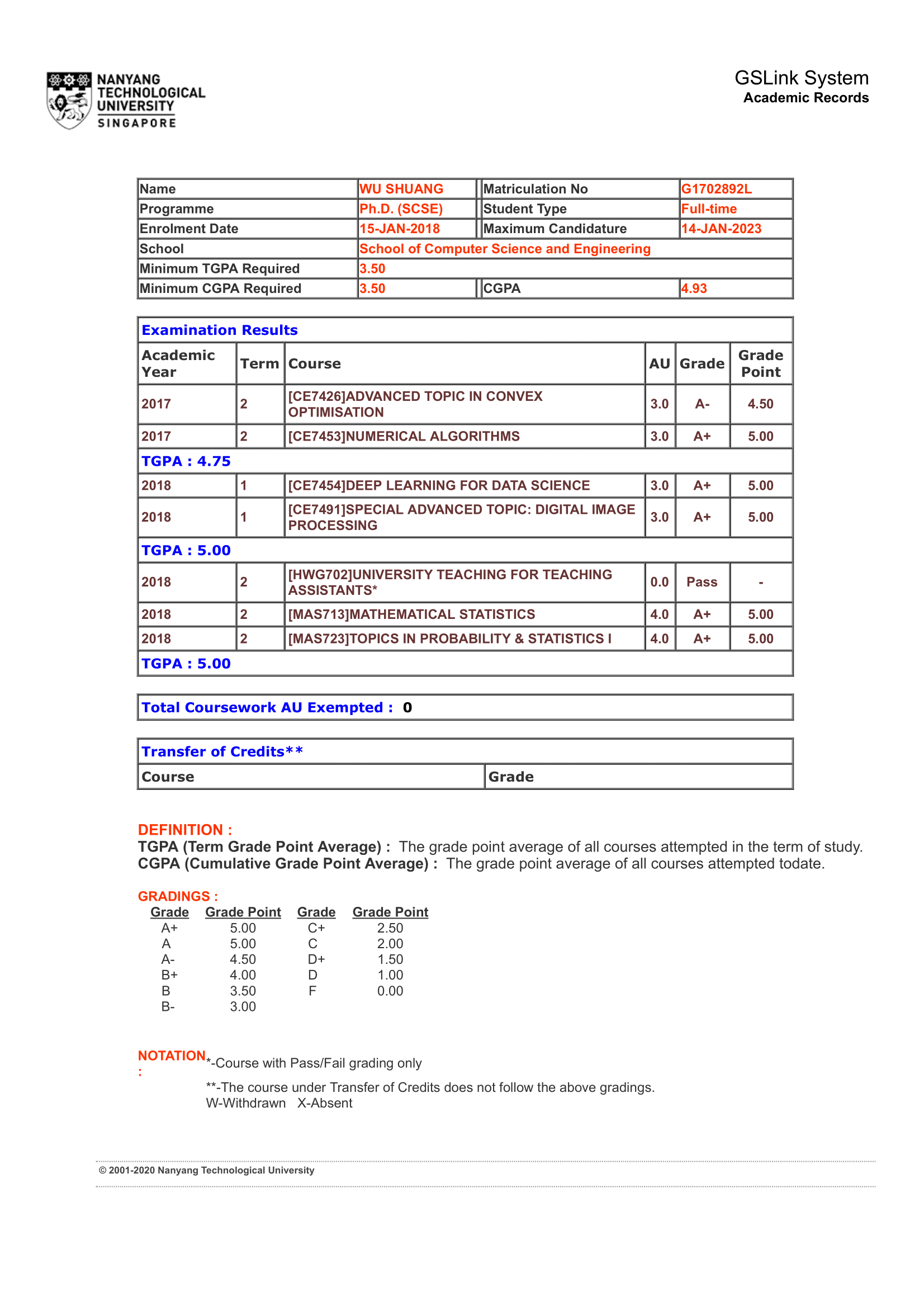
PhD Graduate
Computer Science
Thoughtworks Artificial Intelligence Laboratory
Singapore
First Academic or Research Referee *
Dr. Li Cheng
University of Alberta
Professor
Email hidden; Javascript is required.
Second Academic or Research Referee
Dr. Shijian Lu
Nanyang Technological University
Associate Professor
Email hidden; Javascript is required.
Alumnus of the 73rd Lindau Nobel Laureate Meeting
Alumnus of the Inaugural Hong Kong Laureate Forum
Alumnus of the 70th Lindau Nobel Laureate Meeting
Member of the Singapore Biomedical Research Council Technology Foresighting Taskforce
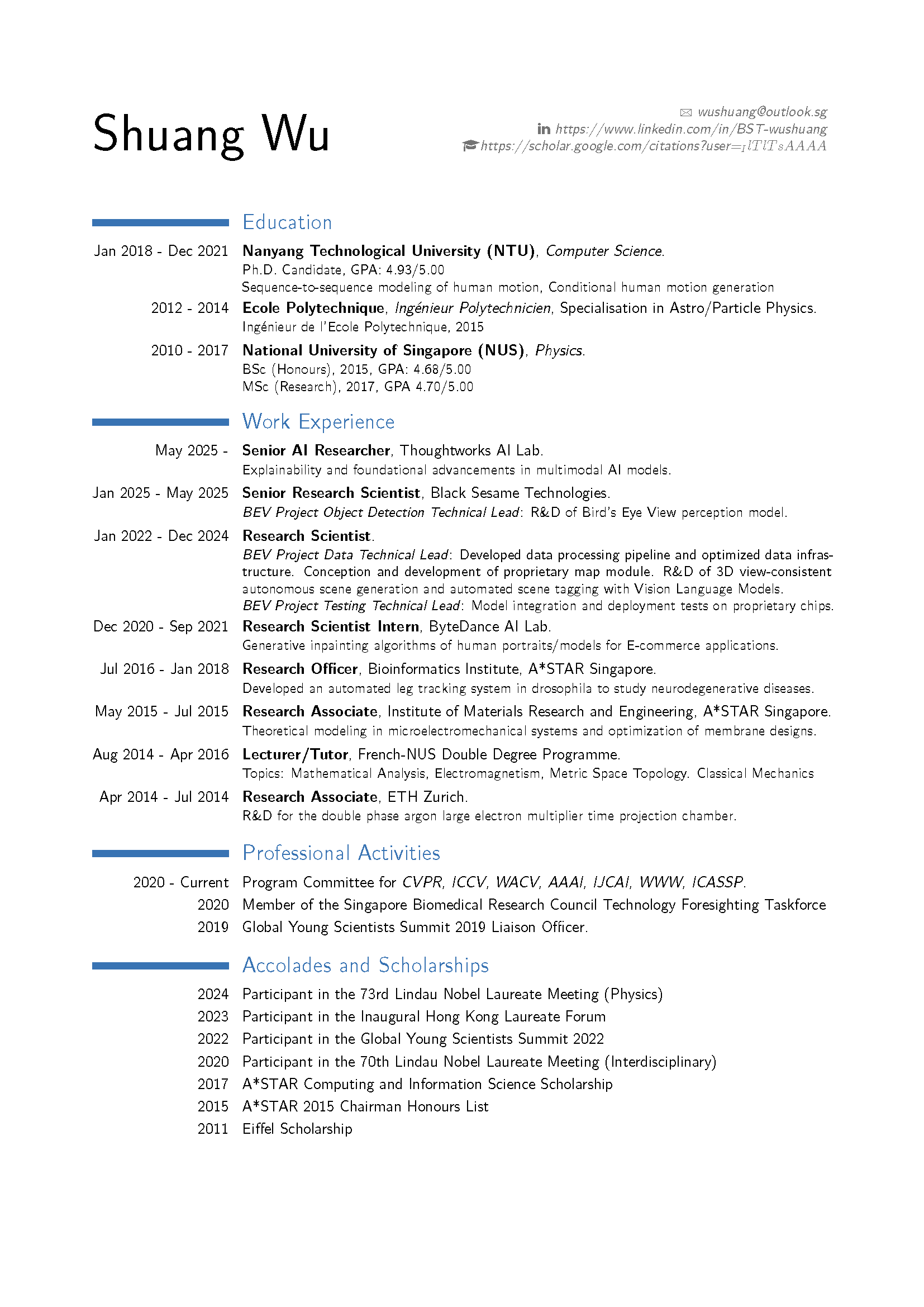
A*STAR Graduate Scholarship
A*STAR 2015 Chairman Honours List (for top performing students in the academic year)
Eiffel Scholarship (for top international students in France)
A*STAR Undergraduate Scholarship
Gold Medal for the Singapore Mathematical Olympiad 2005 (Senior)
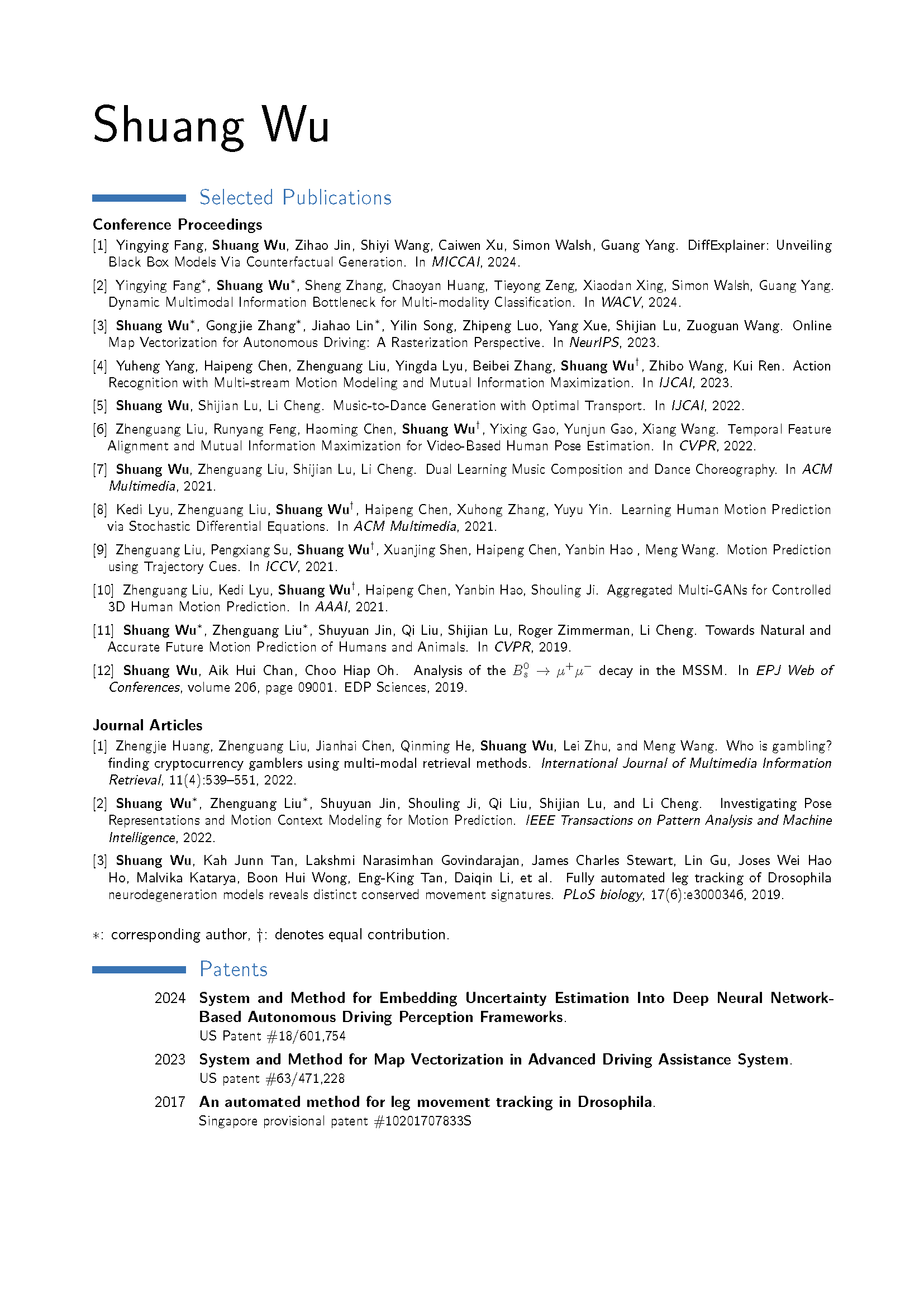
The grail of AI is to replicate perception and cognitive capabilities in humans. However, current multimodal AI models often show marginal improvements over single-modality ones and struggle with explainability, making them inadequate for critical applications like autonomous driving and medical diagnostics.
To address these issues, my research explores two themes:
Optimal transport is a mathematical framework that measures the distance between probability distributions across different domains.
• Gromov-Wasserstein Alignment: This method enables unsupervised alignment of features across different modalities by comparing relationships within their domains.
• Cross-modal Learning: Facilitates generative tasks by aligning features from different modalities, even with limited training samples.
• Domain Adaptation: This capability allows models to transfer learned knowledge between modalities.
Mutual information quantifies the dependency between modalities and tasks, providing a means to optimize multimodal representation learning.
• Feature Fusion Supervision: By maximizing the mutual information between fused features and task labels, this technique ensures the extraction of complementary, task-relevant information from each modality.
• Information Bottleneck: Inspired by human cognitive processes, this principle introduces mechanisms to discard redundant information and retain only task-critical features.
• Explainability and Interpretability: Mutual information enables feature importance analysis, helping identify the relevance of individual features.
No
Yes, as a Young Scientist
HKLF newsletter