
Entry Information
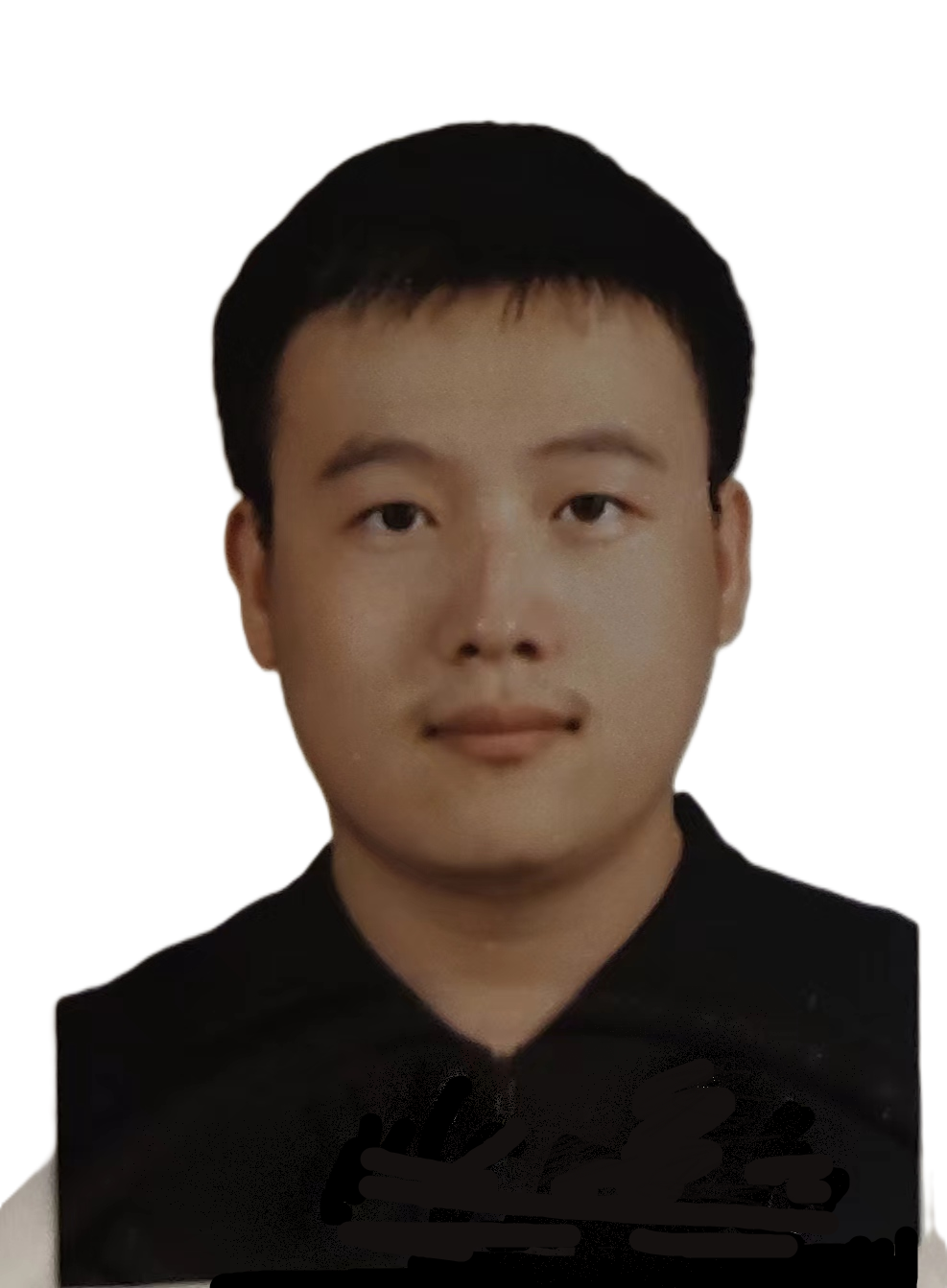
Wanchen Zhang
Mr
Male
19/01/1996
China
Passport
34011
Chinese
Email hidden; Javascript is required.
+8613349295479
University of Science and Technology of China, No.96, JinZhai Road Baohe District
Hefei, Anhui
China
Mathematical Sciences
Mathematical Sciences
I would like to have the opportunity to participate in this forum. I would like to have more opportunities to learn a wealth of recent advances in mathematics from all different directions, and at the same time, I can present some of the latest results I have obtained at the intersection of mathematics and quantum information. I also hope to have the opportunity to discuss some of these issues with more mathematicians, and perhaps bring new perspectives to advance these directions.
Postgraduate (PhD)
Quantum information, Combinatorics
School of Mathematical Sciences, University of Science and Technology of China, Hefei, 230026, China
Hefei, Anhui

First Academic or Research Referee *
Xiande Zhang
University of Science and Technology of China
Professor
Email hidden; Javascript is required.
Second Academic or Research Referee
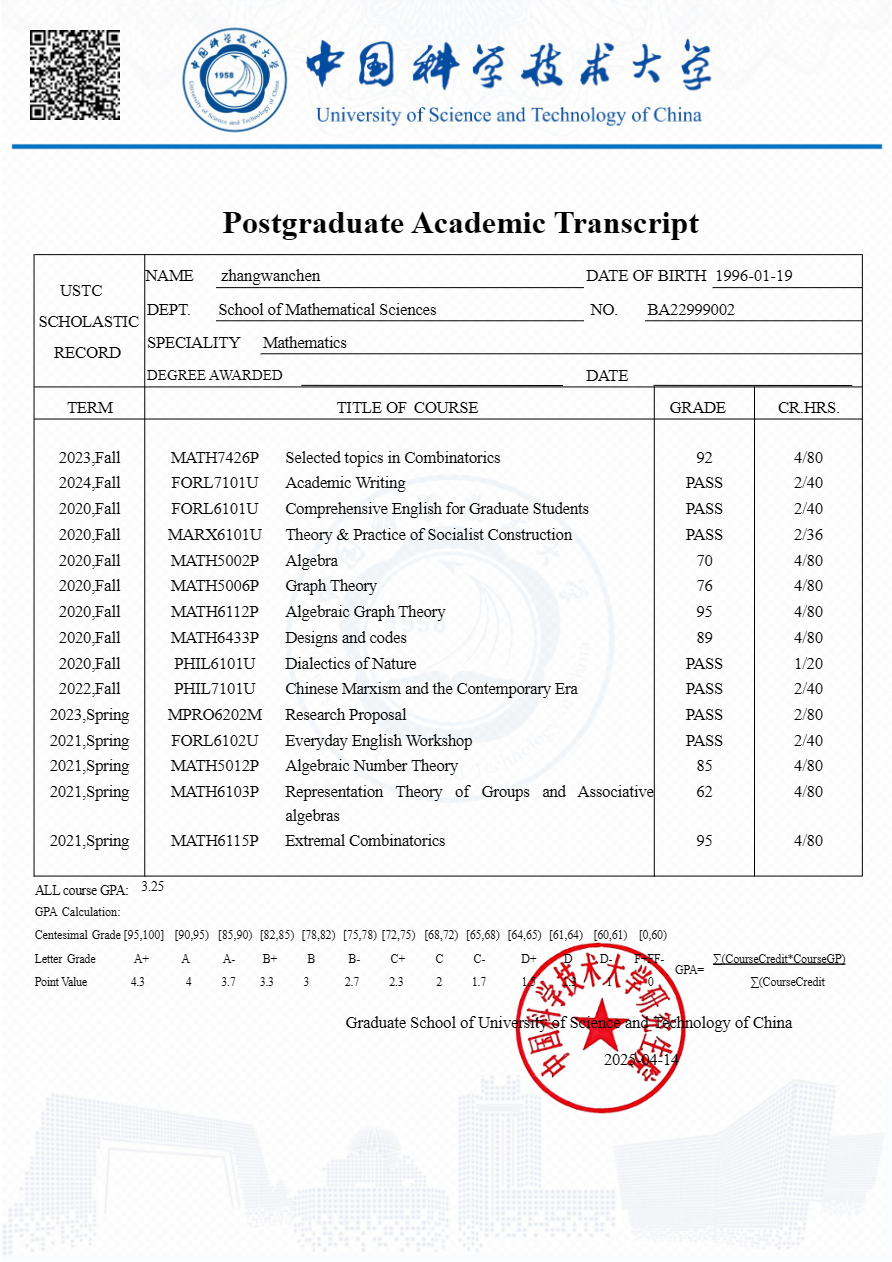
In 2022, the student was awarded a PhD first class academic scholarship.
In 2023, the student was awarded a PhD second class academic scholarship.
In 2024, the student was awarded a PhD second class academic scholarship.
University of Science and Technology of China
The research interests are divided into two main areas, the first of which is the problem of reconstruction of quantum states, a problem on which we proved almost all even-particle pure states are determined by their half-body marginals. The second one is the problem of the largest number of maximally mixed half-body reductions in an arbitrary qubit pure state. We connect this number with the well-known Turán’s number in graph theory and establish an upper bound on the largest number of maximally mixed half-body reductions that one pure state can have. Based on this upper bound, we show that in a pure state of eight qubits, at most 56 many four-party reductions can be maximally mixed, which is the third known value for this problem.
Both Sessions
N/A
University