
Entry Information
Ahmad Zainur
Mr
Male
29/04/2003
Indonesia
Passport
X2984
Indonesian
Email hidden; Javascript is required.
+62895707513700
Jl. Swakarya, Tampan Sub-Disctrict
Pekanbaru
Indonesia
Life Science and Medicine
Life Science and Medicine
Since choosing Biology as my undergraduate major, my goal has been to become a scientist dedicated to addressing global challenges in biodiversity and drug discovery. I’ve pursued internships, authored books, and presented at international conferences, where I saw firsthand how collaboration accelerates breakthroughs. However, as a young scientist, building global connections remains challenging, which opportunities to engage with leading researchers and peers worldwide are rare.
The Hong Kong Laureate Forum offers the ideal platform to bridge this gap. Interacting with 200 driven young scientists would allow me to share ideas, explore interdisciplinary solutions, and spark partnerships in drug discovery. I aim to connect my university, University of Riau and BRC-INBIO with global researchers to tackle pressing issues.
My experiences have taught me that science thrives on teamwork. At the forum, I’d seek mentorships, discuss innovative approaches, and lay the groundwork for projects that merge local insights with global perspectives. I’m equally eager to bring knowledge back to my community, inspiring peers through workshops and mentorship. This forum aligns with my vision to grow as a collaborative, globally minded scientist. I’m ready to contribute my passion and learn from others, fostering partnerships that turn research into real-world impact.
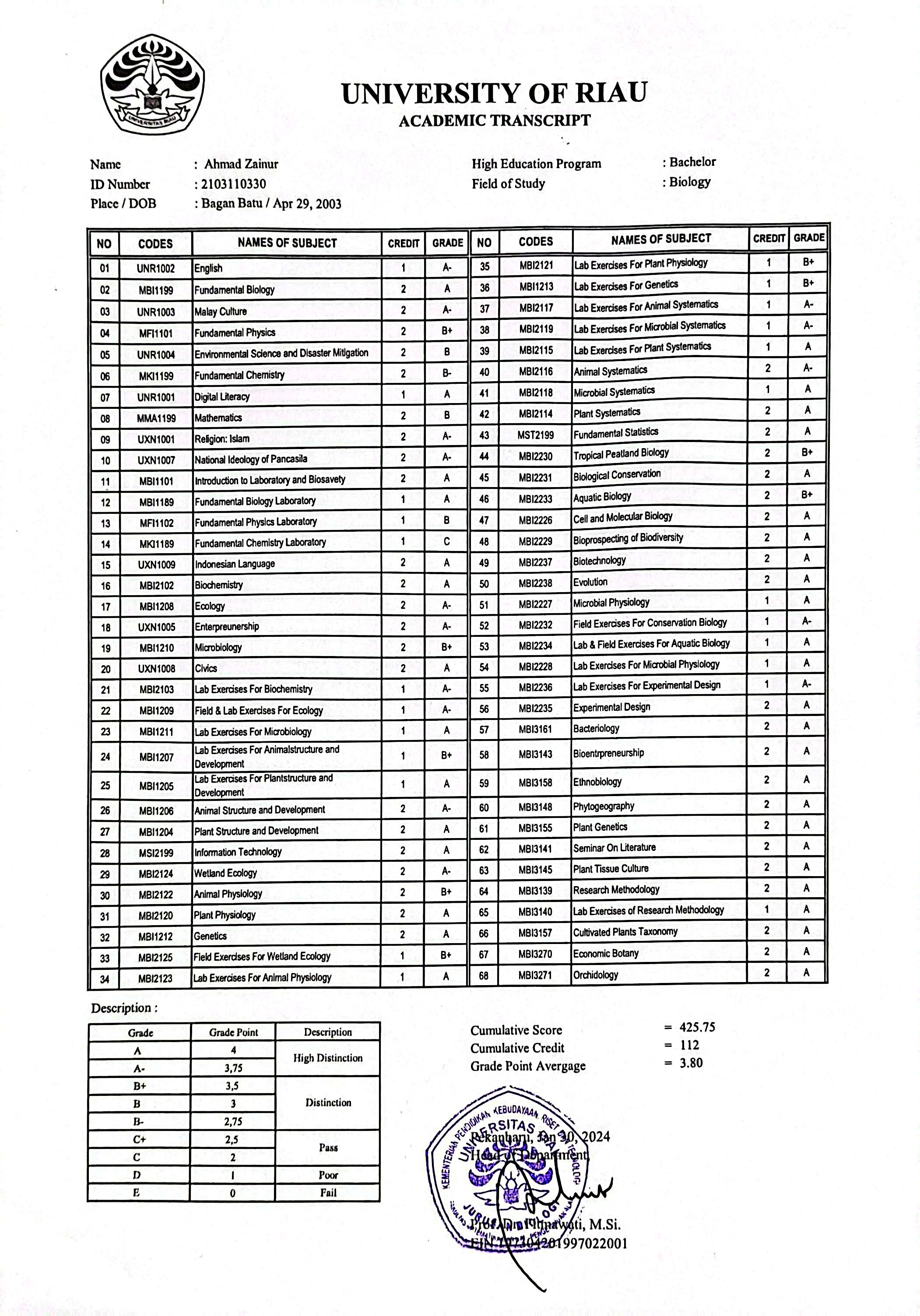
Undergraduate
Biology
University of Riau
Pekanbaru, Riau, indonesia
University of Riau
Bioinformatics Research Center-Institute of Bioinformatics Indonesia (BRC-INBIO)
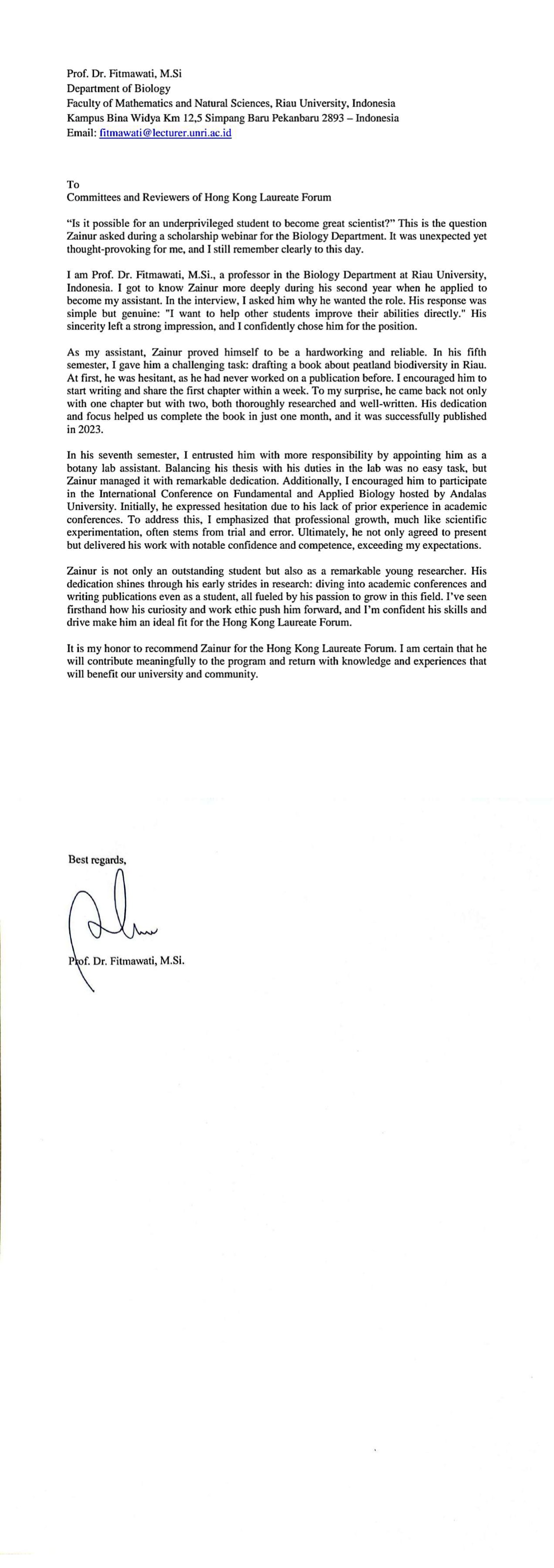
First Academic or Research Referee *
Prof. Dr. Fitmawati, M.Si
University of Riau
Professor at University of Riau
Email hidden; Javascript is required.
Second Academic or Research Referee
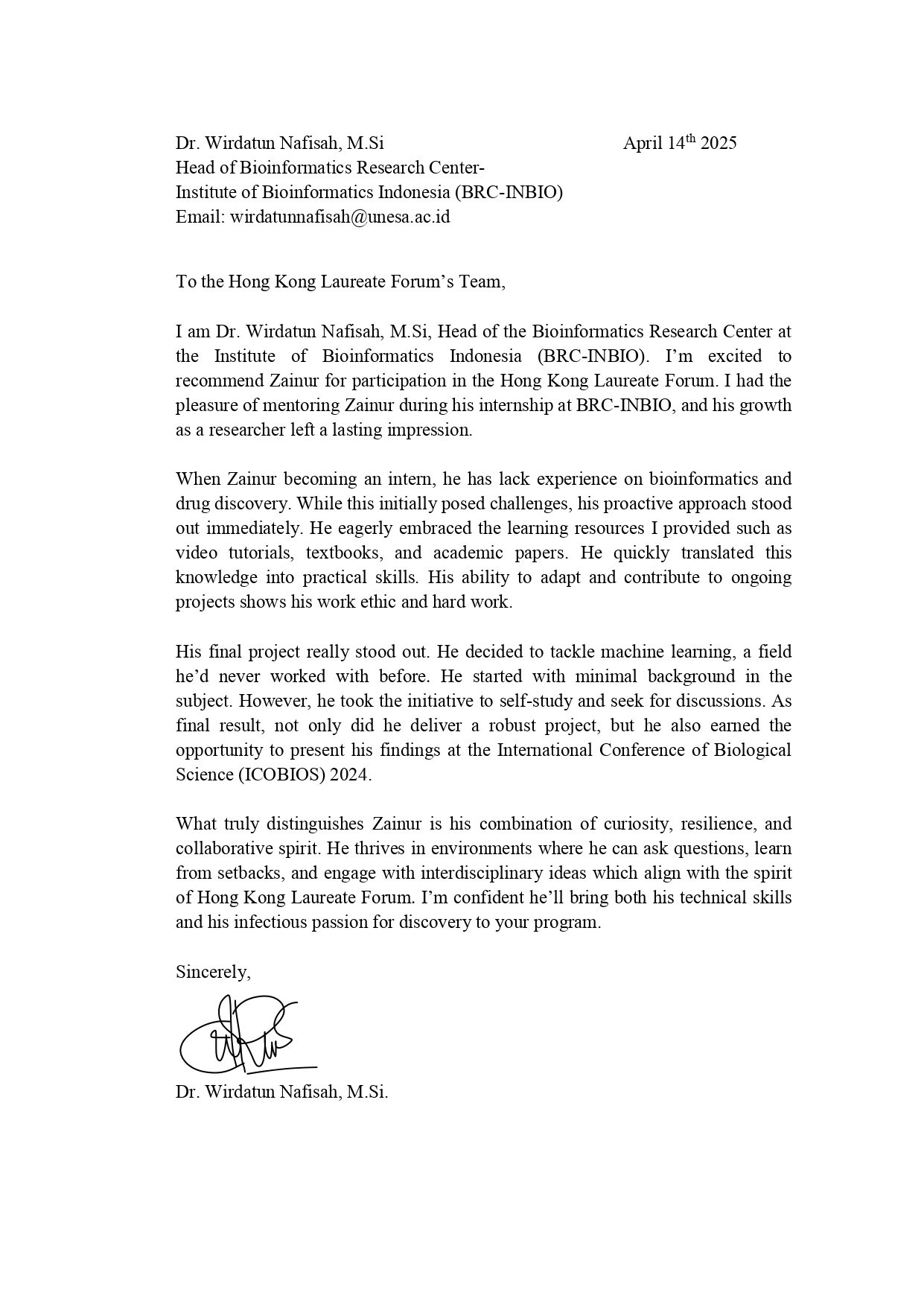
Dr. Wirdatun Nafisah, M.Si
Bioinformatics Research Center-Institute of Bioinformatics Indonesia (BRC-INBIO)
Head of BRC-INBIO
Email hidden; Javascript is required.
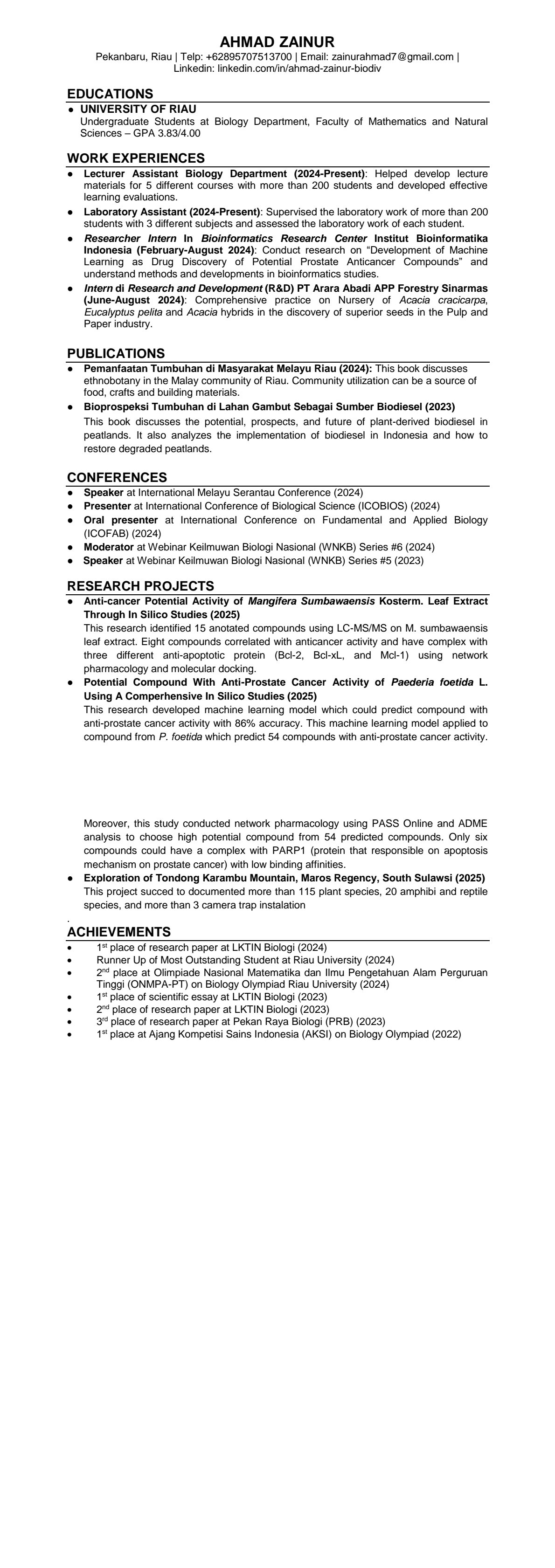
1. Speaker at International Melayu Serantau Conference (2024)
2. Presenter at International Conference of Biological Science (ICOBIOS) (2024)
3. Oral presenter at International Conference on Fundamental and Applied Biology (ICOFAB) (2024)
4. Moderator at Webinar Keilmuwan Biologi Nasional (WNKB) Series #6 (2024)
5. Speaker at Webinar Keilmuwan Biologi Nasional (WNKB) Series #5 (2023)
6. 1st place of research paper at LKTIN Biologi (2024)
7. Runner Up of Most Outstanding Student at Riau University (2024)
University of Riau, Bioinformatics Research Center-Institute of Bioinformatics Indonesia, Indonesian Biology Consortium (KOBI)
Mangifera sumbawaensis is an endemic wild mango from Sumbawa island. Wild mangoes have many biological activities including anticancer agents. In silico can reveal the potency of wild mangoes as anticancer agent. The aim of this study are to (1) identify secondary metabolites from M. sumbawaensis leaves extract based on LC-MS/MS, (2) investigate anticancer activity of M. sumbawaensis leaves based on protein-compound interaction with in silico approach. Leaves of M. sumbawaensis are macerated with etanol 70% (1:10) for 72 hours. Compounds of M. sumbawaensis leaves extract are annotated with LC-MS/MS. Annotated compounds are analyzed for revealing anticancer activity using PASS and molecular docking to Bcl-2, Bcl-xL, and Mcl-1 and drug-likeness activity using SwissADME. This study shows 15 compounds are annotated from M. sumbawaensis leaves extract. Eight compounds correlated with anticancer activity based on PASS analysis. Echinenone, mangiferin and quercetin have the highest binding affinity to protein targets. Eight compounds interact with at least one amino acid target on protein targets. Drug-likeness analysis shows mangiferin and echinenone did not meet the optimal criteria of Lipinski’s rule of five. This research suggests that the ethanol leaves extract of M. sumbawaensis have potency as an anticancer agent through the inihibition of anti-apoptotic protein.
Both Sessions
Yes, as a Young Scientist
Professor